CV Support is key as it gives employers a clear, structured snapshot of who you are as a professional.
In just a short document, they outline your skills, experience, qualifications, and achievements, helping hiring managers quickly decide whether you’re a good fit for a role.
A strong CV highlights your strengths, shows how you can add value, and sets you apart from other applicants. It also demonstrates professionalism, attention to detail, and your ability to communicate effectively.
Since many employers receive large volumes of applications, a well-crafted CV can be the key to securing an interview and progressing in the recruitment process.
Creating a CV from Scratch
Aspirare Recruitment will help with CV Support From First Draft to Final, Job-Winning CV.
Step One: Open your current CV or Download the one below:
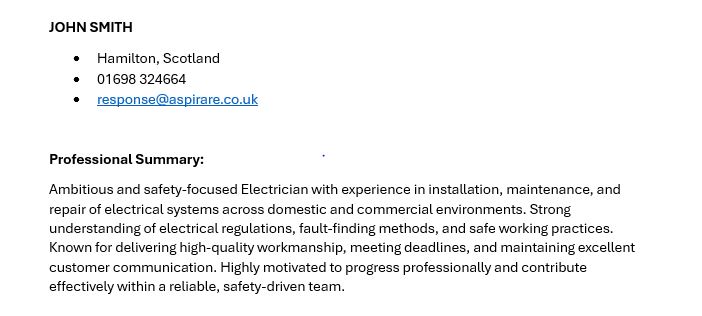
Personal Details such as Name, Location, Phone Number and Email must be up to date. To ensure the Recruiter or Hiring Manager can get into contact with you about your desired role.
Professional Summaries is important because it helps employers quickly understand your strengths, your experience, and why you’re a great fit before they even reach the rest of your CV.
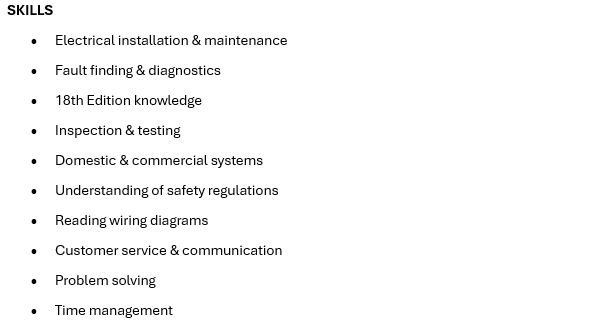
Step Three: Important Skills
What You SHOULD Do
Include skills that match the job description
Always choose skills that are relevant to the role you’re applying for. If the job mentions “fault finding,” “customer communication,” or “teamwork,” include those if they apply to you.
Mix hard skills and soft skills
Hard skills = technical abilities (e.g., wiring, software, tools). Soft skills = personal strengths (e.g., communication, teamwork). A balance shows you’re both capable and professional.
Be specific
Instead of vague skills like “electrical skills,” use: “Fault Finding”, “Financial Forecasting”
Specific skills give employers confidence in your abilities.
Use bullet points for clarity
Bullets help recruiters skim quickly and focus on key strengths.
Keep the list concise
Aim for 8–12 strong, relevant skills. Too many skills can look unfocused or exaggerated.
Place skills where they’re easy to find
Usually under a section titled “Skills” near the bottom or side. Clear structure makes your CV more readable.
Use job-related keywords (ATS-friendly)
Applicant Tracking Systems (ATS) scan for terms like: Electrical installation, Risk assessment, 18th Edition knowledge & Technical documentation
Using the right keywords boosts your chances of passing automated screening.
Step Four: Professional Experience
What you should have within your experience:
Job Title + Dates
Shows your level, role, and how long you worked there.
Key Responsibilities
Describe the main tasks you carried out — relevant to the job you’re applying for.
Achievements
Show what you accomplished, not just what you did. Highlight improvements, successes, or positive impact.
Use Numbers
Include measurable results where possible (e.g., “completed 40+ installations,” “reduced downtime”).
Skills Used
Show which skills you applied on the job (e.g., fault finding, testing, customer communication).
Progression
Mention any growth — new responsibilities, leadership, or promotions.
Clear Bullet Points
Keep it short, clean, and easy to read.
Relevance
Focus on duties that match the job you want.
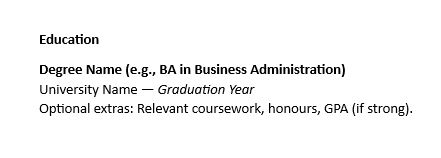
Step Five: Education (Optional)
Include your education only if it supports the job you’re applying for.
Add:
Qualification name
School/College
Dates
Relevant units or achievements (optional)
Keep it brief and only include what’s useful for the role.
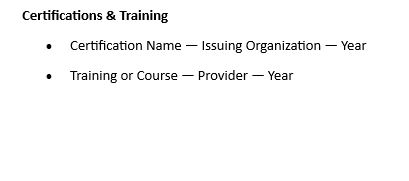
Step Six: Certification (Optional)
Shows verified skills – Certifications prove you have official training, not just experience.
Builds credibility – Employers trust qualifications from recognised organisations.
Makes you stand out – Additional courses or training show motivation and professionalism.
Matches job requirements – Many roles need specific certificates (e.g., 18th Edition, ECS Card).
Demonstrates up-to-date knowledge – Showing recent training proves you stay current with regulations and best practices.
What section do you need help with?
Writing CVs, applying for Jobs and preparing for interviews can be nerve wracking.